

Some of the best home-buying opportunities are not the properties that look perfect the moment you walk through the front door.
Sometimes the right opportunity is the house with the dated kitchen, older flooring, closed-off rooms, or unfinished basement—the property that needs imagination but already has the fundamentals that are much harder to change.
When I help buyers search in Westboro, Bells Corners, and Nepean, I often encourage them to look beyond cosmetic appearance and ask a more important question:
What could this home become?
Buying a property with renovation potential can allow you to personalize your home, improve functionality, preserve character, and create a space that better matches your lifestyle. But there is a major difference between buying a home that needs manageable improvements and buying a property where the renovation becomes much larger, more expensive, or more complicated than expected.
That’s why I don’t evaluate renovation potential based only on whether a kitchen needs replacing.
I look at the location, lot, structure, layout, major systems, renovation possibilities, potential restrictions, expected costs, and the buyer’s long-term plans.
If you’re considering buying a home to renovate in Westboro, Bells Corners, Nepean, or elsewhere in Ottawa, here is how I approach the search.
I Look for Things You Cannot Easily Change First
When buyers enter a dated property, they naturally notice finishes.
They see:
- Old cabinets
- Dated flooring
- Older bathrooms
- Wallpaper
- Light fixtures
- Paint colours
Those things can certainly affect how a property feels.
But they’re usually not the first things I evaluate.
I start with the features that are much harder—or impossible—to change.
These include:
- Location
- Lot
- Street
- Orientation
- Neighbourhood
- Overall structure
- Parking
- Natural light
- General footprint
You can replace cabinets.
You cannot move the property to a better street.
You can install new flooring.
You cannot easily make a narrow lot substantially wider.
Understanding this distinction helps buyers recognize opportunities that others may overlook.
Cosmetic Problems Can Create Opportunity
Some buyers struggle to see beyond outdated décor.
That can work in favour of buyers who have vision.
Imagine walking into a structurally solid home with:
- Older paint
- Dated light fixtures
- Worn flooring
- Traditional cabinetry
- Older bathroom finishes
None of those things automatically make it a bad property.
They may simply mean the home has not yet been updated to contemporary tastes.
If the fundamentals are strong, cosmetic improvements can gradually transform the space.
I Separate Cosmetic Work From Structural Work
This is one of the most important distinctions I help buyers make.
A cosmetic renovation might involve:
- Painting
- Flooring
- Cabinet refinishing
- Counters
- Lighting
- Hardware
- Interior doors
- Trim
A more substantial renovation may involve:
- Removing walls
- Building additions
- Structural modifications
- Major plumbing changes
- Electrical upgrades
- Foundation work
- Extensive basement modifications
Both types of projects can be worthwhile.
But they require very different budgets, timelines, expertise, and approvals.
I want buyers to understand which category their plans fall into before purchasing.
Start With the Layout
Before thinking about finishes, I look carefully at how the house functions.
Ask yourself:
Could I comfortably live with this basic layout?
Maybe the kitchen is dated, but it is already positioned exactly where you want it.
Maybe the bathroom needs renovation, but the size and location are good.
Maybe the basement is unfinished but has excellent potential.
Those situations can be very different from a home where you want to relocate the kitchen, completely restructure the main floor, add bedrooms, and change the staircase.
The more fundamental changes required, the more complicated the project can become.
Don’t Assume Every Wall Can Be Removed
Open-concept renovations are extremely popular.
A buyer sees a wall between the kitchen and dining room and immediately imagines removing it.
Sometimes that may be possible.
But never assume.
A wall may contain:
- Structural components
- Plumbing
- Electrical wiring
- HVAC
Removing or changing walls can turn what appears to be a straightforward renovation into a much more involved project. The City of Ottawa also notes that structural alterations, including adding or removing walls, can require building permits.
That’s why professional evaluation is important before making major plans.
Think About Renovation Potential Before Making the Offer
I don’t want buyers waiting until after closing to begin asking whether their renovation ideas are realistic.
If a particular renovation is essential to making the home work, investigate it before committing whenever possible.
For example, if your entire purchase decision depends on being able to:
- Build an addition
- Add another storey
- Finish the basement
- Add a bathroom
- Create a secondary unit
- Build a detached garage
- Significantly change the floor plan
then appropriate due diligence becomes important.
A home should not be purchased based on an assumption that a major future project will automatically be permitted.
Building Permits Matter
Renovation potential isn’t unlimited simply because you own the property.
Ottawa requires permits for many types of building projects and structural alterations. Depending on the project, zoning rules can also affect setbacks, building height, lot coverage, and where an addition or structure may be located.
This is particularly important when buyers are paying a premium because they believe a property has major expansion potential.
I want that potential investigated rather than assumed.
Why Westboro Is So Interesting for Renovation Buyers
Westboro can be particularly attractive to buyers who are comfortable renovating because the neighbourhood includes a mixture of older housing and newer infill.
That creates opportunities to find properties where location and neighbourhood character are strong even if the interior requires work.
For some buyers, the strategy becomes:
Buy the location and improve the house.
That can make sense when the buyer genuinely values Westboro’s lifestyle.
Location Can Justify Taking on a Project
Westboro buyers may prioritize characteristics such as access to Richmond Road, the Ottawa River and pathway network, transit, cycling routes, parks, shops, restaurants, and established residential streets.
The neighbourhood includes housing from different eras, including older detached and semi-detached properties alongside newer infill.
A dated house in the right Westboro location may therefore be more interesting to some buyers than a beautifully renovated property in an area that doesn’t suit their lifestyle.
Westboro Lots Need Careful Evaluation
A property may look like it has room for expansion, but visual impressions are not enough.
Before assuming an addition or major redevelopment is possible, buyers should investigate the specific property’s:
- Zoning
- Lot dimensions
- Setbacks
- Lot coverage
- Existing building footprint
- Tree considerations
- Other applicable restrictions
Westboro has also been subject to mature-neighbourhood and infill regulations, which makes address-specific due diligence particularly important.
The fact that another property nearby was renovated in a certain way does not guarantee you can do exactly the same thing.
Preserve What Makes a Westboro Home Special
Not every older feature should automatically disappear.
Some established homes contain:
- Original hardwood
- Millwork
- Fireplaces
- Built-ins
- Traditional façades
- Distinctive windows
- Architectural details
Sometimes the best renovation isn’t the one that makes an older property look completely new.
It is the renovation that improves functionality while preserving the character that made the house attractive in the first place.
Renovation Potential in Bells Corners
Bells Corners can offer a very different type of renovation opportunity.
Buyers may encounter established homes where the basic footprint is practical but interior finishes reflect an earlier era.
That can be exactly what renovation-minded buyers want.
A traditional bungalow, split-level, or other established home may provide opportunities to modernize the interior while retaining a mature lot and established neighbourhood setting.
Bungalows Can Be Particularly Interesting
A bungalow can provide excellent flexibility for certain buyers.
Depending on the specific property, buyers may see possibilities for:
- Updating the main floor
- Improving kitchen flow
- Renovating bathrooms
- Finishing the basement
- Creating office space
- Improving storage
For downsizers, a bungalow may also provide long-term lifestyle advantages because important rooms can remain on one level.
For families, the basement may offer additional recreational or guest space.
The right renovation depends on the buyer.
Split-Level Homes Shouldn’t Be Dismissed
Some buyers immediately reject split-level properties because they prefer open-concept newer layouts.
I encourage them to look more carefully.
A split-level may offer interesting separation between living areas while still providing opportunities for modernization.
Sometimes relatively thoughtful improvements to flooring, lighting, kitchen design, railings, and colour can dramatically change how the property feels without completely rebuilding it.
Mature Lots Can Be a Major Bells Corners Advantage
If outdoor space is important, the lot may be one of the biggest reasons to consider an established home.
A mature property may already have:
- Large trees
- Established landscaping
- Fencing
- Patio
- Garden
- Privacy
These features take time and money to recreate.
When comparing a dated established property with a newer home, I encourage buyers to calculate the value of what already exists outside—not simply what needs updating inside.
Renovation Potential Across Nepean
Nepean gives buyers an enormous range of possibilities because housing styles and ages vary significantly from neighbourhood to neighbourhood.
You may encounter:
- Bungalows
- Split-level homes
- Two-storey properties
- Townhomes
- Renovated older homes
- Homes requiring substantial modernization
That variety makes Nepean especially interesting for buyers who are open to improving a property over time.
Nepean Buyers Should Focus on Fundamentals
When I walk through an older Nepean home with renovation potential, I look beyond the décor.
I want to understand:
- Foundation condition
- Roof
- Windows
- Electrical system
- Plumbing
- Heating and cooling
- Insulation
- Basement condition
- Drainage
A dated kitchen is one thing.
A dated kitchen combined with a roof replacement, window replacement, electrical work, foundation concerns, and HVAC replacement creates a completely different financial picture.
The Cheapest House Isn’t Always the Best Renovation Opportunity
This is one of the biggest mistakes buyers can make.
A property may look inexpensive compared with surrounding homes.
That doesn’t automatically mean it represents good value.
Suppose one home costs less but requires:
- Roof replacement
- Electrical upgrades
- New windows
- Kitchen
- Bathrooms
- Flooring
- Basement repairs
Another property may cost more but need only cosmetic improvements.
The second home could potentially be the more manageable purchase.
I look at purchase price plus realistic improvement requirements, not asking price alone.
Create a Renovation Budget Before Falling in Love With the Vision
Renovation shows and social media can make transformations look straightforward.
Real projects involve:
- Materials
- Labour
- Design
- Permits
- Engineering where required
- Unexpected conditions
- Temporary disruption
I encourage buyers to establish a realistic renovation range before making the purchase.
If the project only makes financial sense when everything goes perfectly, the budget may be too tight.
Leave Room for Unexpected Costs
Older homes can reveal surprises once work begins.
Walls and ceilings can hide things that were not visible during the showing.
That’s why I prefer buyers to maintain financial flexibility rather than spending every available dollar on the purchase itself.
A contingency can make the difference between a manageable surprise and a major financial problem.
Get Professional Opinions When the Renovation Is Essential
If the home’s appeal depends heavily on a specific project, professional input can be extremely valuable.
Depending on the renovation, that could involve:
- Contractor
- Home inspector
- Architect
- Designer
- Engineer
- Electrician
- Plumber
I don’t want buyers basing a major purchase on a casual guess about what something “should” cost.
The bigger the renovation, the more important informed estimates become.
Pay Attention to Electrical Capacity
Older homes may have electrical systems that were designed for very different household demands.
Today’s homeowners may want:
- Multiple large appliances
- Central air conditioning
- Home-office equipment
- EV charging
- Entertainment systems
If substantial renovations are planned, electrical requirements should be considered early.
Updating finishes while ignoring underlying infrastructure can create problems later.
Plumbing Changes Can Increase Renovation Complexity
Moving a sink a short distance may be relatively straightforward in some situations.
Relocating an entire kitchen or bathroom can be different.
Plumbing location matters.
If your dream renovation involves dramatically reorganizing wet areas, investigate the feasibility and likely expense.
Sometimes designing around existing plumbing can save considerable money.
HVAC Should Be Part of the Renovation Conversation
Removing walls, building additions, or finishing previously unused spaces can affect heating and cooling requirements.
A renovation should not simply look good.
The completed home needs to remain comfortable.
If the scope is substantial, the home’s mechanical systems may need to be evaluated as part of the project.
Basement Potential Can Add Tremendous Functionality
Basements are one of the first areas I evaluate in renovation-oriented purchases.
A lower level may provide opportunities for:
- Family room
- Home office
- Gym
- Guest area
- Storage
- Additional bathroom
But not every basement offers the same potential.
I consider factors such as:
- Ceiling height
- Moisture
- Windows
- Existing mechanical systems
- Layout
- Access
The City of Ottawa advises that basement finishing and alterations may require permits depending on the work involved.
Moisture Comes Before Beautiful Finishes
If a basement has moisture problems, I want those understood before anyone starts planning flooring and drywall.
Look for potential indicators such as:
- Water staining
- Musty smells
- Efflorescence
- Foundation cracks
- Signs of previous water intrusion
A dry, structurally sound basement is a much stronger starting point for renovation than one where underlying water problems remain unresolved.
Natural Light Is Difficult to Manufacture
One feature I pay close attention to is natural light.
Paint and fixtures can brighten a room.
But good window placement and orientation can be much harder to change.
When evaluating renovation potential, consider how sunlight moves through the house.
A dated room with excellent natural light may have tremendous potential once refreshed.
Ceiling Height Matters
Ceiling height can significantly influence how a renovated home feels.
This is particularly relevant in:
- Basements
- Older additions
- Attic spaces
Don’t assume that beautiful finishes will compensate for a space that fundamentally feels uncomfortable.
Understand the dimensions before planning how you will use it.
Look at the Staircase
Staircases are often overlooked during renovation planning.
But moving or substantially altering a staircase can be complicated and expensive.
If the staircase works reasonably well within the layout, that can be an advantage.
A renovation that works around the home’s fundamental circulation may be more manageable than one that tries to completely reinvent it.
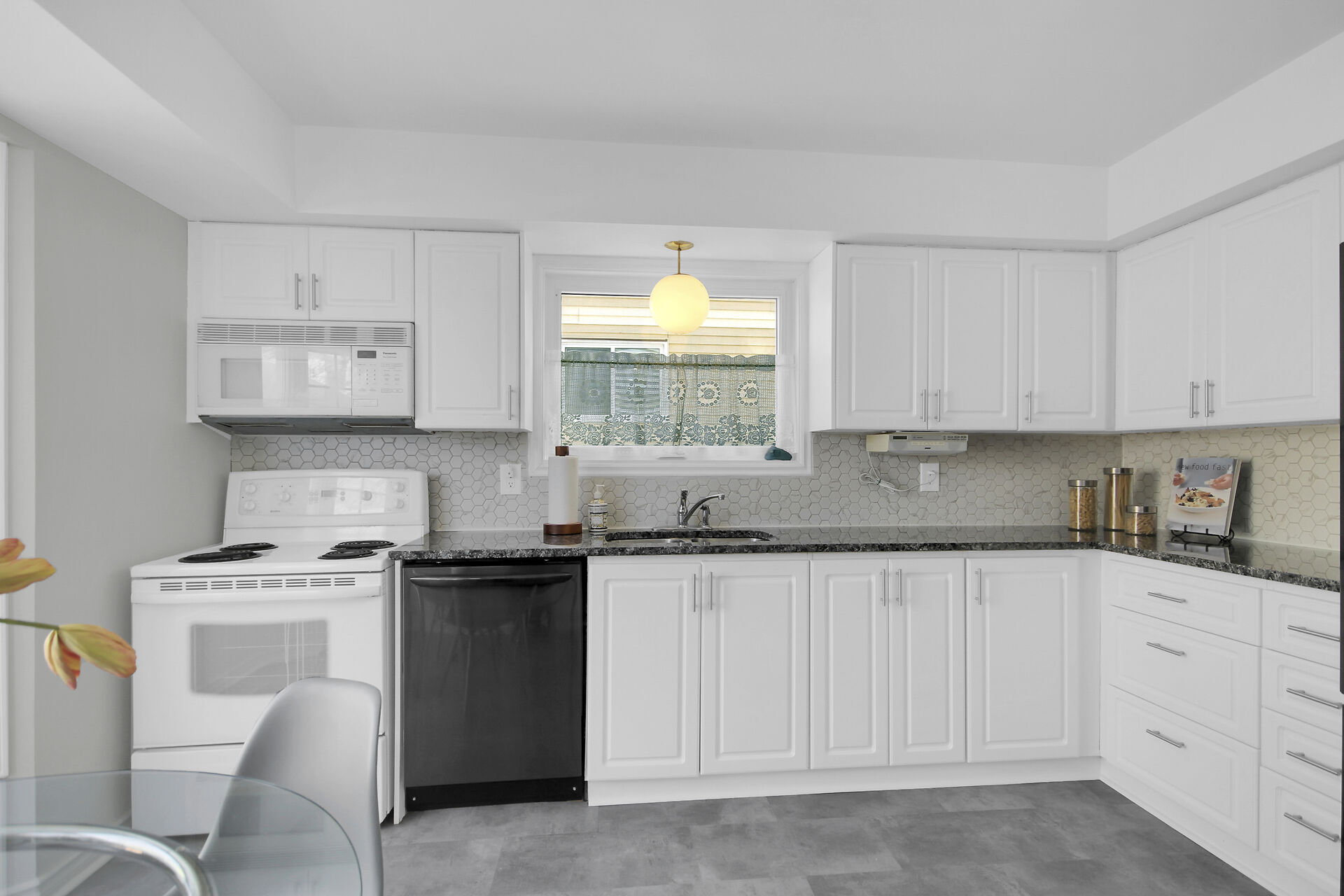
Kitchens Have Huge Transformation Potential
The kitchen is often where buyers see the greatest opportunity.
A dated kitchen can potentially be transformed through combinations of:
- Cabinetry
- Counters
- Backsplash
- Lighting
- Flooring
- Appliances
- Island
- Storage
But I encourage buyers to distinguish between updating the existing kitchen and completely relocating it.
Those are very different projects.
Bathrooms Can Deliver Big Visual Changes in Small Spaces
Bathrooms may be relatively small rooms, but renovation can dramatically change their appearance.
Updated:
- Tile
- Vanity
- Lighting
- Fixtures
- Mirror
- Storage
can transform the space.
Again, keeping plumbing locations relatively similar may help control complexity compared with completely redesigning the room.
Don’t Automatically Replace Hardwood
Older Westboro, Bells Corners, and Nepean homes may contain hardwood that looks tired but still has considerable potential.
Depending on condition, refinishing may restore it beautifully.
Original flooring can also contribute to the character of an established property.
Before replacing everything, determine what can be preserved.
Think Carefully Before Removing Character
Modernization doesn’t need to mean stripping every traditional feature from a home.
Fireplaces, trim, built-ins, doors, and other details may contribute to the property’s identity.
I encourage buyers to ask:
Will removing this actually improve the home, or am I removing something that future buyers might value too?
The strongest renovations often combine modern functionality with existing character.
Heritage Considerations Should Never Be Assumed Away
Not every older home is a designated heritage property.
But if you’re considering a property with heritage status or one located within a Heritage Conservation District, renovation planning can involve additional requirements.
The City of Ottawa notes that alterations affecting designated heritage properties or properties within Heritage Conservation Districts may require municipal heritage approval, including certain additions, window changes, and other exterior alterations.
If a property has heritage considerations, understand them before purchasing based on a specific renovation vision.
Think About Trees Before Planning an Addition
Mature trees are often one of the greatest benefits of established neighbourhoods.
They can also influence renovation planning.
If you’re considering an addition, detached structure, or major exterior project, existing trees and applicable protection requirements may need consideration.
The mature landscaping that makes you love the property should be part of the renovation plan, not an afterthought.
Don’t Over-Improve for the Neighbourhood
This is one of the most important financial conversations I have with renovation buyers.
You may have the budget to create an extremely high-end property.
That doesn’t automatically mean you should.
If the finished home becomes dramatically more expensive than surrounding properties, recovering every dollar spent may be difficult.
I encourage buyers to balance:
Personal enjoyment
with
neighbourhood context and future resale.
You should create a home you love, but understand the market around it.
Renovate for Broad Functionality
Some improvements tend to make a property easier for a wide range of people to enjoy.
Examples can include:
- Functional kitchen
- Good storage
- Improved bathrooms
- Quality flooring
- Better lighting
- Finished living space
- Practical home office
Highly specialized renovations can still be worthwhile if they matter to you.
But they may have a narrower audience when you eventually sell.
Don’t Expect Every Renovation Dollar Back
Renovations can improve comfort, functionality, appearance, and marketability.
That does not mean every dollar spent will automatically increase the resale price by the same amount.
I encourage buyers to think about renovation as a combination of:
Lifestyle value + property improvement + possible resale benefit.
That is much healthier than assuming every project is an investment with a guaranteed return.
Living Through Renovations Is Part of the Cost
Renovation isn’t purely financial.
There is also disruption.
You may deal with:
- Dust
- Noise
- Contractors
- Deliveries
- Temporary kitchens
- Unusable bathrooms
- Changing timelines
Some buyers enjoy watching a property transform.
Others quickly discover they hate living around construction.
Be honest about which person you are.
Consider Renovating in Stages
Not every project needs to happen immediately after closing.
A phased approach may look like:
Phase One: Paint, lighting, flooring, cleaning and minor repairs.
Phase Two: Kitchen and bathrooms.
Phase Three: Basement or larger structural projects.
Phase Four: Exterior improvements and landscaping.
Living in the property before completing major renovations can also teach you how the home actually functions.
Your priorities may change.
A Home Inspection Becomes Especially Valuable
When buying a property specifically because you intend to renovate, understanding existing condition becomes extremely important.
I want buyers to know whether their renovation budget is likely to be spent primarily on improvements they want—or repairs they didn’t expect.
There is a big difference between spending $30,000 because you want a beautiful new kitchen and unexpectedly redirecting that money toward major building systems.
Knowledge helps protect the renovation plan.
Look at Previous Renovations Too
A home may already have been renovated several times.
I want buyers to consider:
- Quality of workmanship
- Consistency
- Whether structural changes appear professional
- Available documentation
- Permit history where relevant
A previous renovation isn’t automatically an advantage.
Quality matters.
Don’t Forget the Exterior
Renovation-minded buyers often focus entirely on the interior.
But the exterior can require significant investment too.
Look at:
- Roof
- Siding or masonry
- Windows
- Doors
- Deck
- Driveway
- Drainage
- Landscaping
A beautiful interior renovation doesn’t eliminate exterior maintenance.
Parking Can Be More Valuable Than Another Cosmetic Upgrade
This is particularly worth considering in established neighbourhoods.
If parking is limited, it can affect everyday convenience and potentially future buyer appeal.
Before becoming obsessed with interior possibilities, make sure the property’s practical features work for you.
Renovation Potential Should Support Your Lifestyle
The best renovation isn’t necessarily the most dramatic.
It’s the one that solves actual problems.
Maybe you need:
- Better kitchen flow
- Dedicated office
- Additional bathroom
- Finished basement
- More storage
- Improved connection to the backyard
Those changes can significantly improve everyday living without completely rebuilding the house.
Westboro, Bells Corners, or Nepean: Which Is Right for a Renovation Buyer?
Each can provide different opportunities.
Westboro
I would consider Westboro for buyers who place a high value on location, walkability, established character, mature streets, and proximity to central Ottawa—and who may be willing to renovate to obtain the property they want in that setting.
Bells Corners
I would explore Bells Corners with buyers who appreciate established residential areas, mature outdoor space, practical housing styles, and the opportunity to modernize an existing property.
Nepean
I would consider the broader Nepean area for buyers who want a wide range of established housing styles, neighbourhood choices, and renovation possibilities while remaining well connected to Ottawa.
My Renovation-Potential Checklist
When I help buyers evaluate a property, I want them thinking about the whole picture:
- Is the location right?
- Is the lot useful?
- Does the basic footprint work?
- Is the structure in reasonable condition?
- What major systems need attention?
- Which improvements are cosmetic?
- Which improvements are structural?
- Are the renovation ideas realistically permitted?
- What is the likely budget?
- Is there room for unexpected expenses?
- Can the work happen in stages?
- Will the finished home suit the neighbourhood?
- Would I still want this property if renovation costs increase?
That last question is especially important.
Final Thoughts
Buying a home with renovation potential in Westboro, Bells Corners, or Nepean can be an exciting way to create a property that feels uniquely yours.
But successful renovation buying starts long before the contractor arrives.
It starts with choosing the right house.
I encourage buyers to prioritize the features that are difficult to change: location, lot, structure, natural light, parking, neighbourhood, and basic footprint.
Then we evaluate what can realistically be improved.
A dated kitchen can become beautiful.
Older flooring can be replaced or restored.
A tired bathroom can be transformed.
An unfinished basement may become valuable living space.
But structural problems, unrealistic expansion plans, zoning limitations, and an inadequate renovation budget can change the entire experience.
When I help clients search in Westboro, Bells Corners, Nepean, Kanata, Stittsville, Barrhaven, Manotick, Richmond, Carp, Almonte, Arnprior, Carleton Place, Mississippi Mills, and throughout the Ottawa region, I don’t want them simply buying a fixer-upper because it looks like a bargain.
I want them buying a property where the existing fundamentals and realistic renovation possibilities work together.
The right renovation property isn’t necessarily the house that needs the most work.
It’s the house where the right work can unlock the most potential for the lifestyle you want to create.